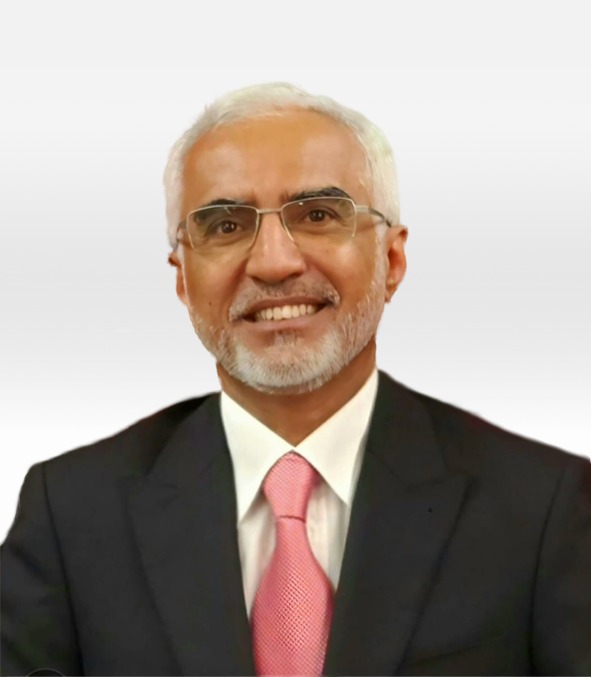
Read more below from Prof. Omar Al Rawas, Secretary General, on the achievements of The Arab Board of Health Socializations and partnership with the Ophthalmology Foundation from 8 June 2026:
Mission, countries served, and role in ophthalmology
For readers who may be unfamiliar with the Arab Board, could you tell us about its mission, the countries it serves, and its role in ophthalmology training across the Middle East?
The Arab Board of Health Specializations (ABHS) is a regional, non-profit institution, established in 1978 by the Council of Arab Ministers of Health of the Arab League, with a mission to improve health services in Arab countries by setting standards for postgraduate training, examinations, accreditation, and Continuing Professional Development. Currently, the ABHS has 65 specialty programs across all Arab countries, developed and overseen by 20 Scientific Councils with faculty representation from all member countries.
The Arab Board ophthalmology program was established in 1992. It provides a structured four-year training pathway designed to prepare ophthalmologists with the knowledge, clinical judgement, surgical skills, ethics, and commitment to lifelong learning required for safe specialist practice.
Trainees and Graduates
Approximately how many ophthalmology trainees and graduates are currently participating in Arab Board programmes, and how has this grown during your tenure as President?
At present, more 25,000 trainees are enrolled in the 65 specialty programs including 905 in ophthalmology, and we have graduated more than 30,000 by the end of 2025 including 1,068 ophthalmology graduates. During the past six years, the annual intake of new trainees has increased from less than 3000 in 2019 to more than 5000 in 2025, reflecting wider recognition of the qualification, expansion of accredited training centers, and stronger engagement from national training bodies.
Achievements over the past six years
You have led the Arab Board through a period of significant development. Looking back over the past six years, what achievements are you most proud of?
The achievement we are proud of over the last six years is the institutional transformation of the Arab Board from a primarily examination-based body into a more comprehensive regional platform for training standards, accreditation, curriculum development, digital assessment, faculty development, and international collaboration. In ophthalmology specifically, we have strengthened governance, improved examination processes, expanded cooperation with regional and international institutions, and moved toward more structured, competency-based training
Reasons for the Arab Board’s growing reputation
The Arab Board is now widely regarded as one of the leading postgraduate medical qualifications in the region. What factors have contributed to its growing reputation and success?
The ABHS reputation has grown because it addresses a real regional need: a trusted postgraduate qualification that understands Arab health systems while aspiring to international standards. The key factors have been standardized curricula, transparent examinations, accreditation of training programs, strong scientific councils, collaboration with ministries and national bodies, and increasing partnerships with respected international institutions.
Digital transformation
The Arab Board has embraced digital transformation, including electronic examinations, online learning, and simulation-based training. What impact has this had on trainees and training programs across the region?
Digital transformation has made training and assessment more accessible, more consistent, and more resilient. Electronic examinations have improved standardization and reach. Online learning has allowed trainees from different countries to access common educational resources. The deeper value is not technology itself; it is using technology to reduce variability and improve educational access and quality.
Maintaining consistent standards across countries
Maintaining consistent educational standards across multiple countries is a significant undertaking. How does the Arab Board ensure that trainees receive a high-quality and comparable training experience regardless of where they are training?
Maintaining consistency across different countries is certainly one of the biggest responsibilities of the Arab Board. We do this by working on a shared curriculum, agreed training requirements, structured logbooks, periodic reporting, scientific council oversight and a common assessment structure, so that all trainees are working towards the same standard, regardless of where they are based. A mandatory foundation program for all trainees, an Arab Board lecture series covering all essential topics of the curriculum, subscription to major international educational platforms are tools developed to achieve this goal.
We also place strong emphasis on accreditation, quality assurance, and regular communication with training centers and program directors. Only centres capable of providing the required training programs are accredited, with a special emphasis on maintain a low trainer to trainee number. This helps us to identify variation, support centers where needed, and ensure that trainees have access to appropriate supervision, clinical exposure, and educational opportunities.
The aim is not to remove the individual strengths of each country or training Center, but to ensure that every trainee who completes Arab Board training has met a recognized and comparable regional standard.
Curriculum design and quality assurance
Curriculum development and standardization are increasingly important in medical education. How does the Arab Board approach curriculum design and quality assurance in ophthalmology training?
Curriculum development begins with the competencies required of a safe ophthalmologist. Our approach, therefore combines clinical sciences, surgical skills, patient safety, professionalism, community eye health, research literacy, and lifelong learning. Quality assurance depends on regular curriculum review, alignment between curriculum and assessment, feedback from trainees and trainers, and bench marking against international developments.
Partnership with the Ophthalmology Foundation
The Arab Board and the Ophthalmology Foundation recently established a partnership. What do you see as the key benefits of this collaboration for trainees, educators, and institutions across the region?
The partnership between the Arab Board and the Ophthalmology Foundation brings together two organizations with a shared commitment to advancing ophthalmic education and training. For trainees, it provides access to internationally bench marked educational resources, examinations, fellowships, and professional development opportunities that can help support career progression and lifelong learning.
For educators and training programs, the collaboration creates opportunities to share expertise in curriculum development, assessment, faculty development, and quality assurance. This exchange of knowledge can help strengthen training standards and promote best practices across the region.
For institutions, the partnership supports greater alignment with international educational standards while recognizing the specific needs and realities of ophthalmology training within Arab countries. It also opens the door to collaborative educational initiatives, research opportunities, and the development of new programs that can benefit both organizations.
Ultimately, the goal is to enhance the quality of ophthalmic education, support the next generation of ophthalmologists, and improve patient care by ensuring that trainees have access to high-quality, accessible, and internationally recognized educational opportunities.
Future collaboration
Looking ahead, how do you envision the Arab Board and the Ophthalmology Foundation working together to further strengthen ophthalmology education, training standards, and professional development throughout the Middle East?
Looking ahead, I believe there is significant potential for the Arab Board and the Ophthalmology Foundation to work together to further enhance ophthalmology education and training throughout the Middle East. Both organizations share a commitment to high educational standards, and by combining our strengths we can create opportunities that benefit trainees, educators, and institutions across the region.
I see collaboration developing in several areas, including curriculum development, faculty training, assessment, examinations, fellowships, and continuing professional development. The Ophthalmology Foundation’s international network and educational programs can complement the Arab Board’s deep understanding of regional training needs and its established role in postgraduate medical education.
We also have opportunities to collaborate on webinars, educational resources, simulation-based training, and research into medical education. By sharing expertise and best practices, we can help ensure that trainees across the region have access to high-quality, contemporary training that is aligned with international standards while remaining relevant to local healthcare systems.
Most importantly, I hope this partnership will help create clear educational pathways for young ophthalmologists and support the development of future educators and leaders. The most valuable outcome would be a sustainable regional network of ophthalmology educators who can train, assess, mentor, and lead improvement in their own countries and ultimately contribute to improving eye care and patient outcomes throughout the Middle East.
Vision for the next 5–10 years
What is your vision for the future of ophthalmology training in the Arab world over the next five to ten years?
Our vision is for ophthalmology training in the Arab world to become more competency-based, more equitable, more digitally enabled, and more closely connected to population health needs. We need graduates who are clinically excellent, surgically safe, ethically grounded, research-aware, and prepared to serve both advanced urban centers and underserved communities. The future should not be measured only by the number of graduates, but by the quality of care they deliver and the strength of the training systems they help build.
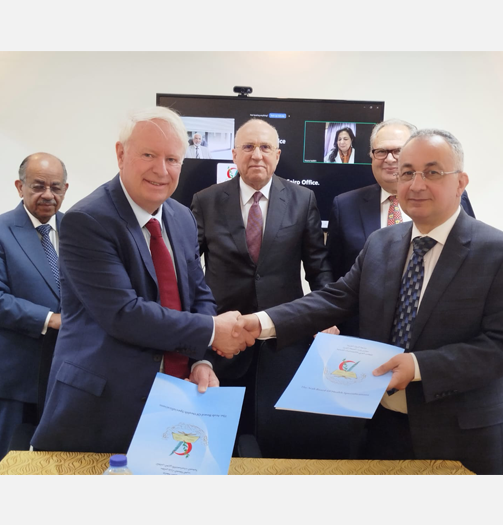
The Arab Board of Health Formalizing the partnership between the Ophthalmology Foundation and The Arab Board of Health Specializations.
Pictured front row: Mr. David Pyott, Vice President of the Ophthalmology Foundation and Dr. Essam El Toukey, Professor of Ophthalmology, Cairo University.
Pictured in back row: His Excellency Prof Dr. Adel Adawi, ex minister of health, Egypt; Prof Dr. Ahmed Othman, head of CPD committee, Arab Board of Ophthalmology; Prof Dr. General Ahmed Altawdi, manager of Arab Board, Egypt office.